
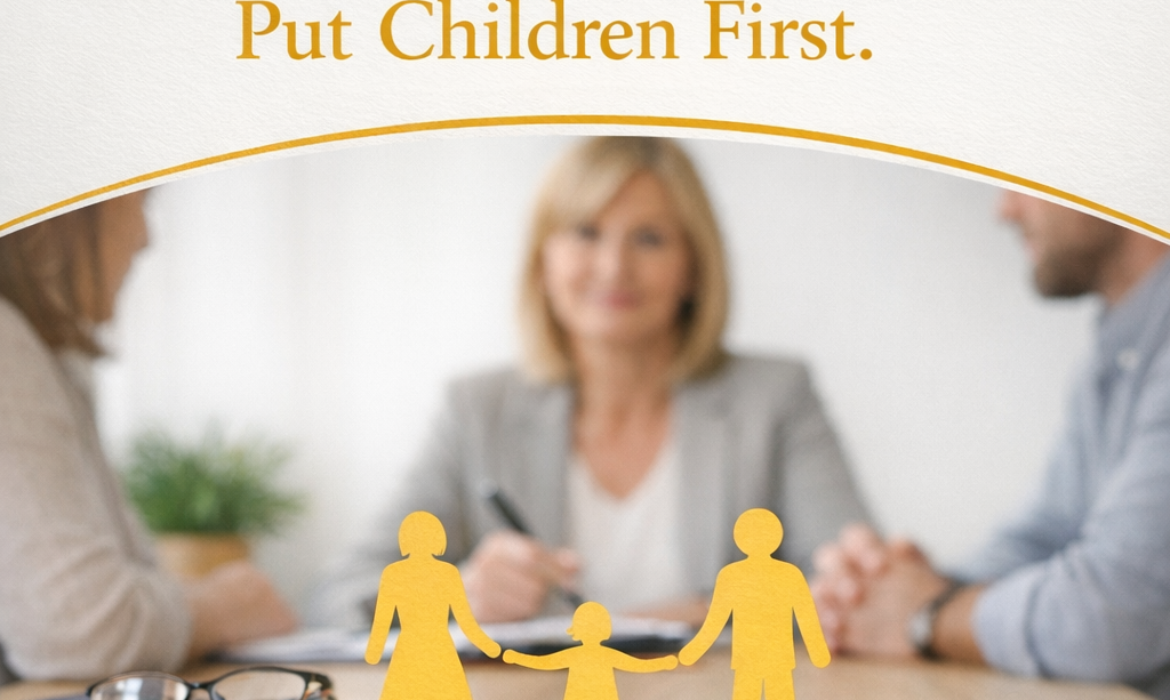
Dear Separating Parents: Putting Children First
A significant new report from the Family Solutions Group has recently been launched, accompanied by a powerful letter from the Children’s Commissioner for England addressed directly to separating parents.
The message is clear and important: when parents separate, the experience for children can be very different from the experience of the adults involved.
For parents navigating the emotional and practical challenges of separation, it is natural to focus on resolving disputes, protecting interests and planning for the future. However, children often experience separation primarily through the lens of uncertainty, tension and conflict.
Research consistently shows that it is not separation itself that is most harmful to children, but the level of ongoing parental conflict they are exposed to during and after that process.
The work of the Family Solutions Group encourages family professionals – lawyers, mediators, therapists and others – to adopt a problem-solving approach which supports families in resolving issues constructively and reducing conflict wherever possible.
At 174 Family Law, this approach reflects the way we work with families every day.
Seeing Separation Through a Child’s Eyes
Children rarely have the same understanding of separation as adults. They may not fully grasp the legal process or the reasons for the breakdown of a relationship. What they do notice, however, is the emotional environment around them.
They see arguments.
They sense tension.
They worry about the future of their family.
For many children, the most difficult aspect of separation is feeling caught between the people they love most.
Helping parents step back and consider the situation from their child’s perspective is often one of the most important steps in reducing conflict and finding constructive solutions.
A simple but powerful question we often encourage parents to ask is:
“How might this feel from our child’s perspective?”
This shift in perspective can be transformative.
The Role of Family Law Professionals
The Family Solutions Group report highlights the evolving role of family law professionals. Increasingly, the expectation is not simply to manage legal disputes but to help families move forward in ways that prioritise children’s wellbeing.
This means supporting parents to:
- communicate more constructively
- focus on long-term outcomes rather than short-term conflict
- avoid unnecessary litigation where possible
- place children’s needs at the centre of decision-making
Mediation and other non-court dispute resolution processes can play an important role in helping families achieve these outcomes.
Keeping Children at the Heart of Decisions
Every family’s circumstances are unique, and separation can be one of the most challenging transitions parents and children experience. However, when parents are able to reduce conflict and work together respectfully, children are far more likely to adapt well to the changes in their family life.
At 174 Family Law, our work is guided by a commitment to helping families navigate separation in a way that protects children from unnecessary conflict and keeps their wellbeing at the forefront.
The legal process may eventually conclude, but the family relationship continues. The way parents manage separation today can shape their children’s sense of security, relationships and wellbeing for years to come.
Keeping children at the heart of decisions is therefore not simply an ideal – it is a responsibility shared by parents and the professionals who support them.
If you are currently going through separation, this may be one of the most emotionally challenging periods of your life. Feelings of hurt, frustration, fear about the future and uncertainty are all completely natural.
However, during this time your children are also trying to make sense of the changes happening around them.
They may not understand the legal process or the reasons behind the separation. What they often notice most is the emotional atmosphere between their parents.
Children can feel anxious about being caught in the middle. They may worry about upsetting one parent by showing affection to the other. They may feel responsible for the tension they sense around them.
For children, the greatest reassurance comes from knowing that although their parents’ relationship has changed, their love, support and care for them remains constant.
Whenever possible, it can be helpful for parents to pause and consider:
- What does my child need most right now?
- How might the current situation feel from their perspective?
- What can we do as parents to reduce the conflict they may be experiencing?
Even small changes in communication and approach between parents can make a significant difference to how children experience separation.
How Mediation Can Help Reduce Conflict
Family mediation provides a safe and structured environment where separating parents can work through important decisions with the support of an impartial professional.
Rather than focusing on blame or past difficulties, mediation helps parents focus on practical solutions for the future.
This can include discussions about:
- arrangements for children
- communication between parents
- financial matters following separation
- creating parenting plans that support children’s stability and wellbeing
The aim is to help families reach agreements that are workable, child-focused and sustainable over the long term.
At 174 Family Law, mediation is approached with a clear focus on reducing conflict and helping parents make decisions that prioritise their children’s wellbeing.
Where appropriate, mediation can also support parents in ensuring that the voice of the child is considered, helping parents better understand how separation may be experienced from their child’s perspective.
By resolving matters constructively, families can often avoid the stress, cost and uncertainty associated with court proceedings, while maintaining a more positive co-parenting relationship moving forward.